Current work
Simulation, Learning and Edge AI at Arrive AI
What I'm working on now, described at the level I'd put on a resume. The specifics belong to my employer.
What I’m doing
I joined Arrive AI after finishing my PhD, and the work is a direct continuation of it: simulation first, hardware second, with the gap between them as the actual engineering problem.
Simulation at scale. Building a digital twin environment in NVIDIA Isaac Sim so scenarios can be tested before anything reaches the real world. This is the part of my research I most wanted to keep doing. A simulator earns its keep when it catches a failure that would otherwise have happened in front of someone.
Reinforcement learning. Continuing the policy-training work my PhD was built on.
Vision-language-action models. Standing up and evaluating open VLM and VLA models such as OpenVLA and OpenPI.
Perception and inference. Evaluating and optimizing vision transformers for real-time perception, accelerating inference with NVIDIA Triton, the DeepStream SDK and TensorRT.
Choosing the silicon. Profiling edge devices for the latency-throughput trade-offs that decide what will actually run: Jetson Orin Nano, Orin AGX and Thor (Blackwell), and, beyond NVIDIA, Qualcomm’s IQ9075 and hardware from Infineon Technologies. Picking a compute platform is a decision you live with for years, so it’s worth measuring rather than assuming.
Getting it deployed. Architecting the containerized AI inference codebase with Docker so deployment is repeatable rather than artisanal, working with the platform team on the k3s side. I also build the web frontend for low-latency WebRTC video streaming.
About Arrive AI
Arrive AI connects people, robots and drones through the Arrive Point™ Network, built to scale the future of delivery. This page describes my work at the level it appears on my resume. The systems themselves aren’t mine to show, so there’s no footage or product detail here. If you’d like to talk about any of it in more depth, get in touch.
More projects
See all →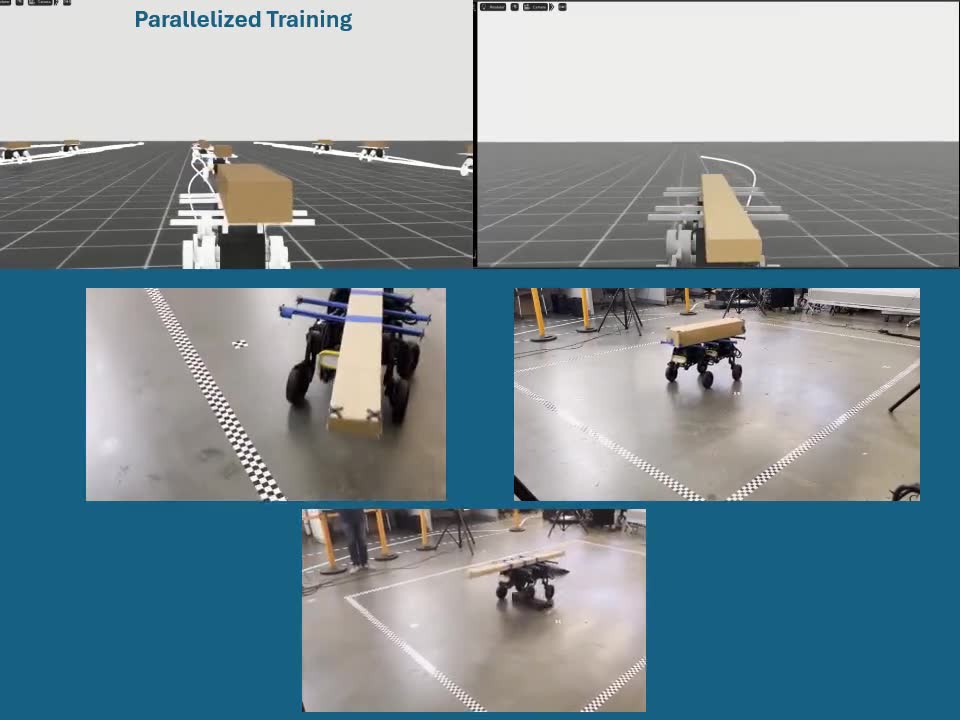 ICRA 2025
 Coordinated Payload Transport with Biped-Wheeled Robots
One reinforcement learning agent driving two balancing robots to carry a shared payload, trained in Isaac Lab and transferred to hardware with no fine-tuning.
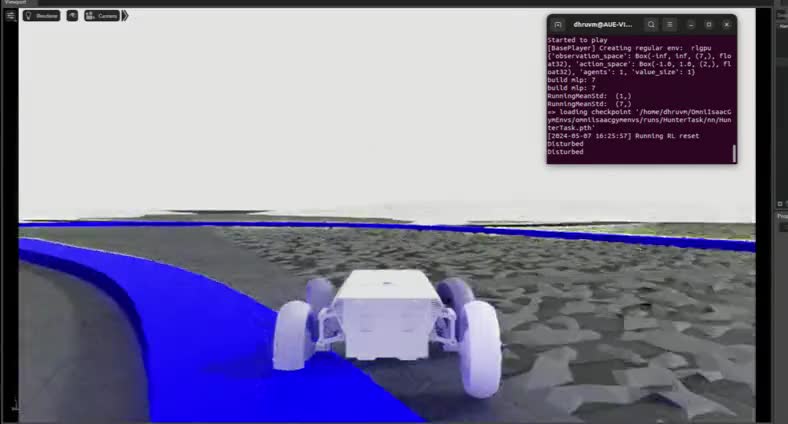 IEEE AIM 2024
 Rough-Terrain Path Tracking with Hybrid Deep Reinforcement Learning
A model-based controller and a learned policy working together, so an Ackermann-steered vehicle tracks a path across terrain neither was tuned for.
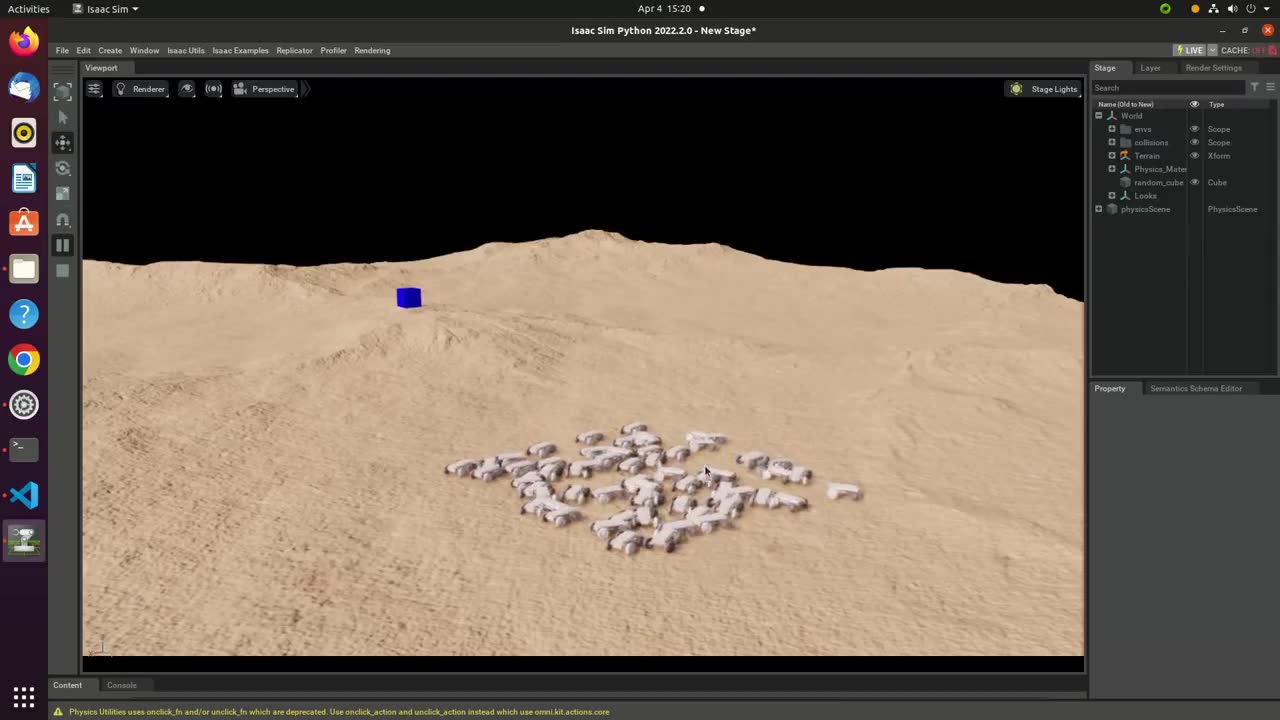 IFAC 2025
 Agile Off-Road Traversal of an Ackermann-Steered Platform
Goal-to-goal navigation learned end-to-end for a mid-scale off-road vehicle, with reward shaping tuned for stability rather than raw speed.