LiDAR-Inertial Odometry and Mapping on a Unitree Go1
SLAM algorithms are usually validated on wheels. A quadruped gives the same sensor a very different ride.
The problem
LIO-SAM fuses LiDAR and IMU into odometry and a map, and it does it well, on platforms that move smoothly. A quadruped doesn’t. Every footfall is an impulse through the sensor mount, the IMU sees gait periodicity that has nothing to do with the robot’s actual trajectory, and the point cloud is being swept by a sensor that is bobbing in three axes.
What I did
Integrated a Velodyne VLP-16 on a Unitree Go1 and brought up the full stack: drivers, the transform tree, and the launch pipeline that ties them together. Then the real work of tuning LIO-SAM’s parameters for a legged platform instead of the wheeled ones its defaults assume.
Evaluating it honestly
A map that looks good on screen can still be wrong. I evaluated the system on real-world runs against the three things that actually matter: odometry drift over the run, whether loop closure fired when the robot returned to somewhere it had already been, and whether the resulting map stayed self-consistent instead of smearing surfaces into each other.
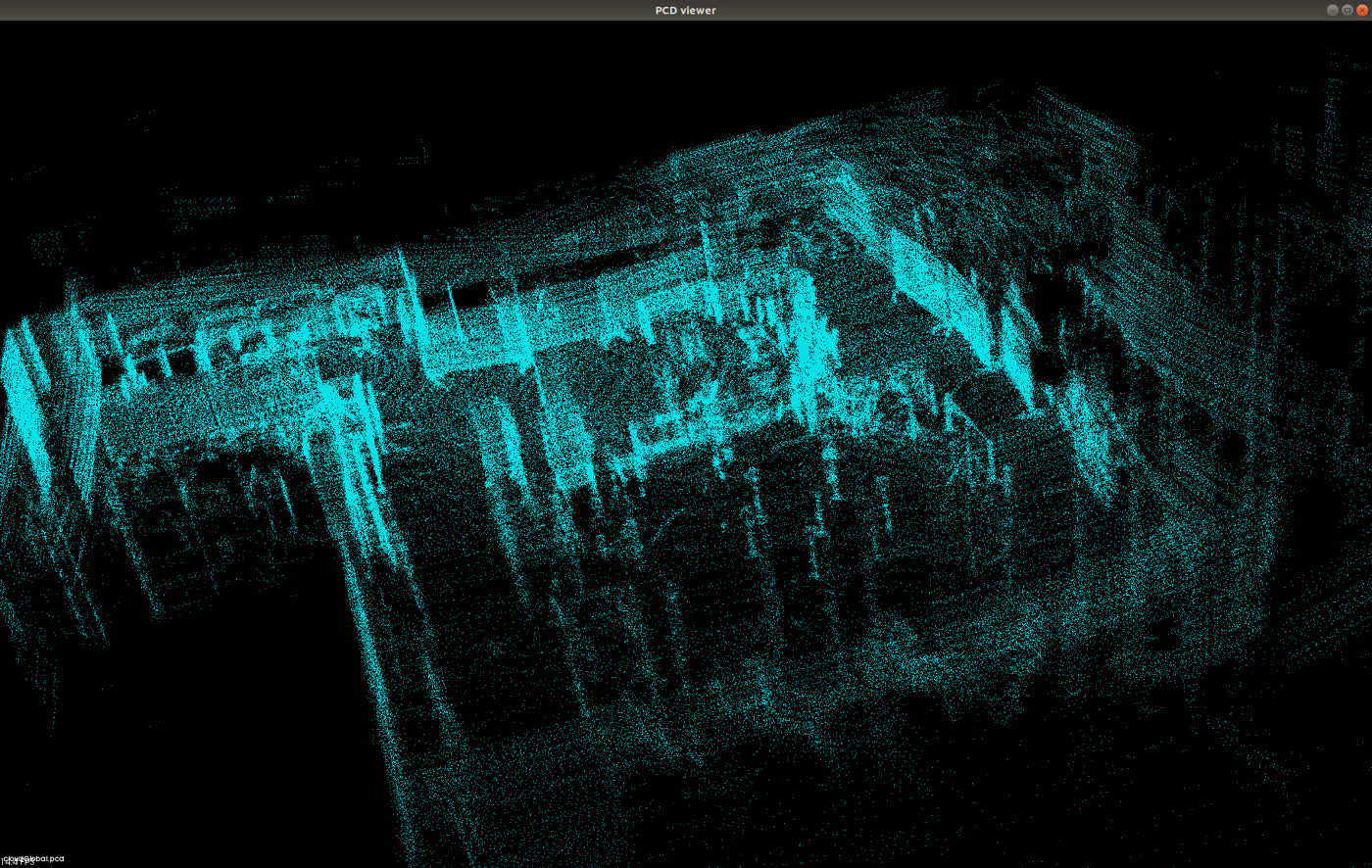
This one sits outside my published work, but it’s the project that taught me the most about how much of SLAM performance is sensor mounting and parameter discipline rather than algorithm choice.
More projects
See all →Current work
Simulation, Learning and Edge AI at Arrive AI
Digital twin simulation, reinforcement learning, vision-language-action models, and the edge inference stack that has to run modern models fast enough to be useful.
 ICRA 2025
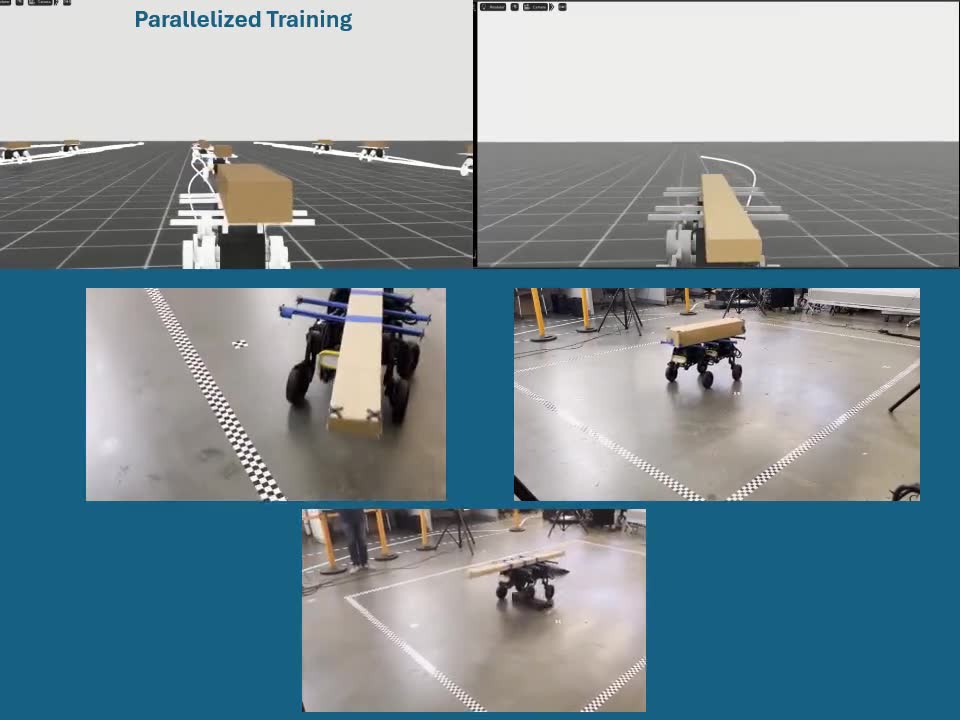
 Coordinated Payload Transport with Biped-Wheeled Robots
One reinforcement learning agent driving two balancing robots to carry a shared payload, trained in Isaac Lab and transferred to hardware with no fine-tuning.
 IEEE AIM 2024
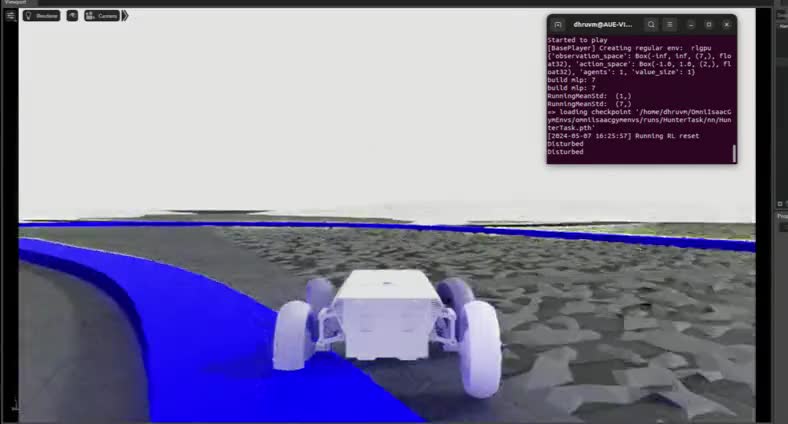
 Rough-Terrain Path Tracking with Hybrid Deep Reinforcement Learning
A model-based controller and a learned policy working together, so an Ackermann-steered vehicle tracks a path across terrain neither was tuned for.